
From agent platform to AI-governed execution.
The end-to-end solution for enterprise AI at scale.
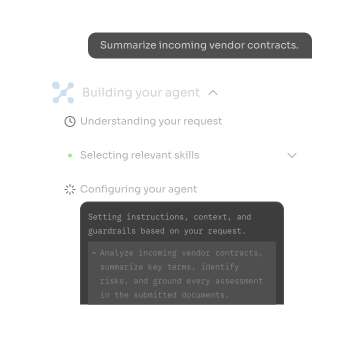
Build agents by conversation. Each version is tested before it goes live, then improves from user ratings and admin adjustments.
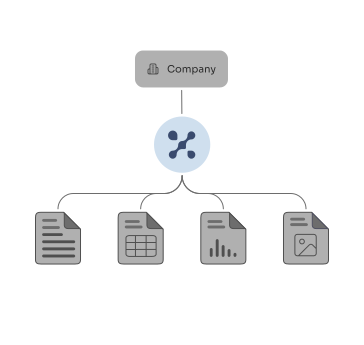
Turn enterprise files into AI-ready data, permissioned and traceable to source.
One control path for every model and tool call. Identity, policy, guardrails, sandbox, MCP access and token budgets are checked before execution, so every team stays within its cost limits.
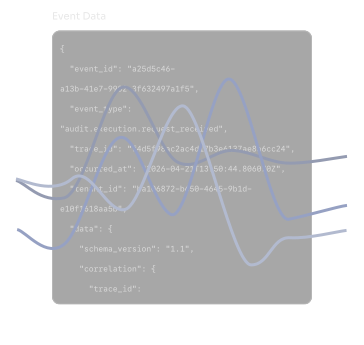
Every prompt, model call, tool call and decision recorded as runtime evidence, with cost attributed to each team.
Run on your own GPUs, private cloud or any model vendor. Your data and models stay under your control.
The Enterprise Intelligence Infrastructure
Build agents with Xerno. Govern every AI action with Xparse.
Xerno
Agent PlatformAgents that finish the work, and keep improving.
Your AI workforce, built from your own know-how.
- 01Build Agents by Conversation
Describe the task in natural language. Xerno finds the skills and connectors, writes the instructions, tests and fixes, then the agent plans, runs tools and finishes the work.
- 02Turn Enterprise Data into AI-Ready Data
Pipeline pre-processes files at build time, so agents read clean data and spend fewer tokens on every task.
- 03Agents That Improve from Feedback
Ratings from users, adjustments from admins. The agent reads it all, fixes itself, and is retested before the new version goes live.
- 04Managed Across the Lifecycle, Within Permissions
Build, test, deploy, monitor, update, retire. RBAC and file-level access are inherited by every agent, so it works only where its user may.
Runtime enforcement by Xparse →
Xparse
AI RulerMake every AI action governable.
Every request enters with context, passes one control path, executes only within approved boundaries, and leaves evidence behind.
Every AI request is bound to a real user, group and tenant, inherited from your existing identity provider. Xparse injects identity at the platform level, so applications cannot report it for themselves.
Example: an analyst and an intern ask the same agent, and each sees only the data their role allows.